Sep 15, 2026
Round vs. Diamond Locating Pins: Why Using Two Round Pins Can Cause Problems
A practical explanation of round and diamond locating geometry for fixture positioning and alignment.
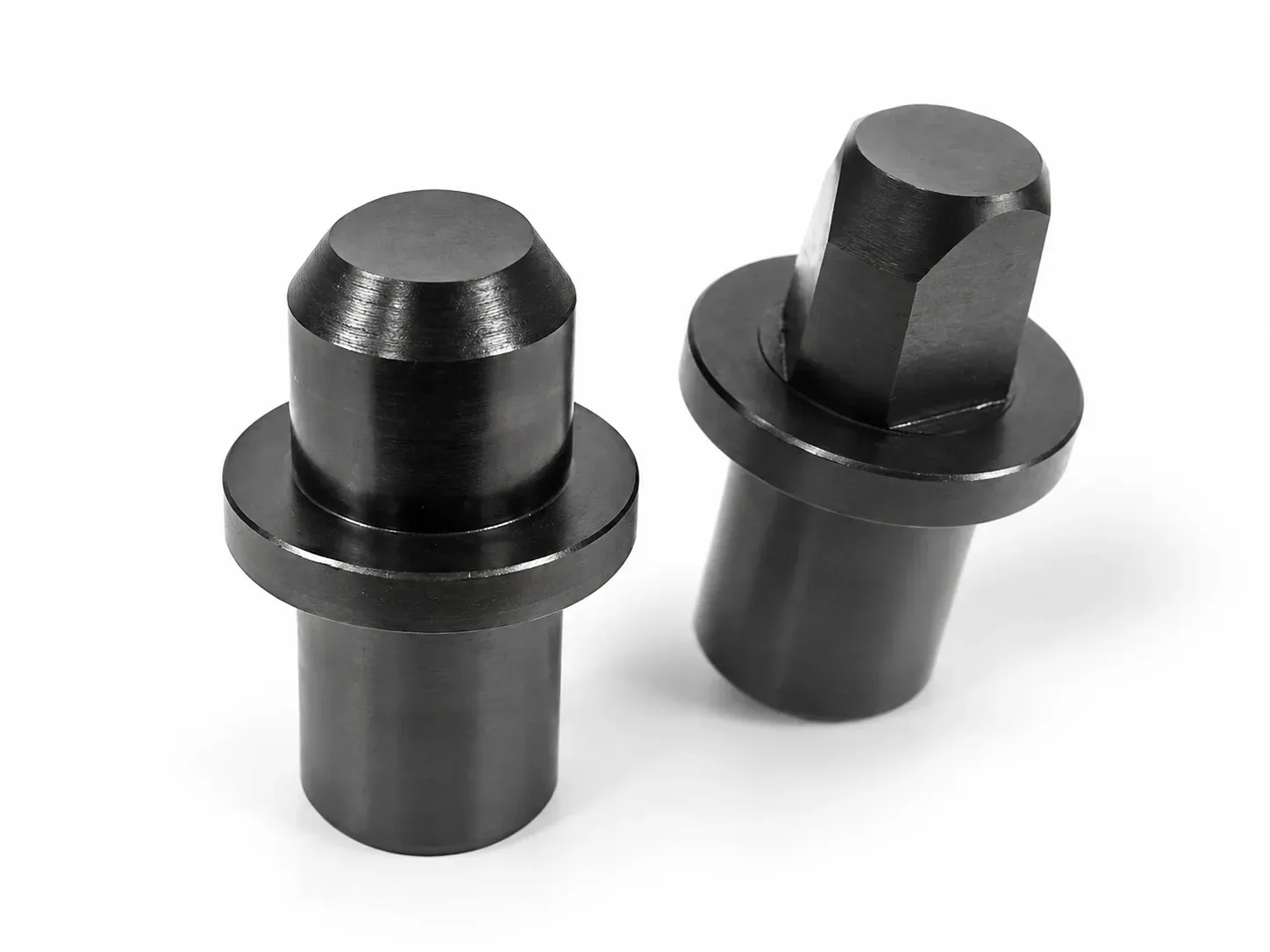
Round and diamond locating pins are often discussed together because they solve different parts of the same fixture-positioning problem. The round pin establishes the main locating point. The diamond or relieved pin can support orientation while allowing controlled relief in one direction.
Direct Answer: Two Round Pins Can Over-Constrain the Part
Two fully constraining round pins can create binding when hole spacing, pin spacing or manufacturing variation is not perfectly aligned. A round-plus-diamond arrangement can help locate the part while reducing sensitivity to spacing variation. This is a fixture design principle, not a universal rule for every assembly.
What the Primary Round Pin Does
The primary round pin establishes a precise locating reference. It is typically responsible for controlling position at the main datum point through the mating hole or bushing interface.
Because it constrains movement around that point, the primary pin and its mating interface should be specified together. Pin diameter, head geometry, fit and bushing condition all matter.
What the Secondary Diamond Pin Does
The secondary locating point helps control orientation, but the relieved diamond geometry reduces constraint in one direction. This can help the assembly locate without forcing two circular holes to match two fully round pins exactly.
The direction of relief matters. It should correspond to the fixture layout, spacing direction and how the component is loaded onto the locating system.
Why Spacing Variation Matters
Even well-made components have manufacturing variation. If two round pins fully constrain two holes, small differences in center distance can make installation difficult or cause binding. A relieved secondary locator gives the system a controlled way to absorb that variation.
This does not mean every design must use a diamond pin. It means the locating arrangement should be reviewed as a system rather than selected as two separate pins.
Consider the Pin and Bushing Interface Together
Locating pins often work with bushings or defined mating holes. The bushing interface can protect the fixture plate, provide a replaceable locating surface and clarify how the locating system is assembled.
When specifying both components, confirm which interface is primary, which is secondary and how relief or clearance is intended to work.
RFQ Checklist for Round and Diamond Locating Arrangements
- Primary and secondary locating positions
- Round, diamond, tapered or other pin geometry required
- Mating hole or locator bushing details
- Center distance or drawing of the locating pattern
- Installation method and surrounding fixture layout
- Quantity, drawing, reference part or application notes
Related products:
Round & Diamond Locating Pins
Related interface:
Precision Locator Bushings